

Alloys and composites are both combinations of elements, yet the terms are not synonymous. How do you distinguish between the two? Let’s take a look at the similarities and differences.
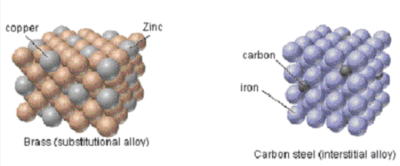
Alloys
Alloys and composites can most easily be differentiated by the presence of a metal. Alloys are mixtures of multiple elements with one being a metal, whilst composites are mixtures without metals.
In most cases, a parent metal (or participatory metal) is needed as a base when making an alloy. This serves as the alloying agent in most cases, although alloying agents can be both metal and non-metal.
Alloys are sought for their beneficial properties, typically combining their individual components into a stronger substance. They are usually considered homogeneous, meaning they are made up of very similar elements. This is commonly seen in jewellery, with precious elements that would otherwise break or deteriorate easily bolstered by another element; for example, gold is commonly mixed with zinc, copper, or nickel composites.
Common examples of alloys you can find in day-to-day life are steel, bronze, copper, and solder.
Composites
As mentioned earlier, composites are also combinations of two or more elements, but metals are absent from the mixture. Unlike alloys, composites are considered heterogeneous, meaning they are made up of dissimilar elements.
Composites can occur naturally or artificially; for example, wood can be a naturally occurring composite, made up of cellulose fibres. Engineered wood can include many products; for example, plywood is manufactured from many thin ‘plies’ of wood.

While composites are exclusively heterogeneous, alloys can be either homogeneous or heterogeneous depending on what you are making. When choosing the correct process for your purposes, seeking professional guidance is a necessity; for example, specialists such as https://www.poeton.co.uk/ can advise on the most appropriate surface treatment solution for industrial components.
Other key differences to note include lustrousness: alloys can be lustrous, whilst composites cannot due to an absence of metal. Likewise, alloys can conduct electricity thanks to their metal components, whilst composites do not (unless they are polymers).
